New York State (2025)
- Total Food Insecure Population: 2,710,714
- Food Insecure Children: 909,476
- Food Insecure Seniors: 332,492
- Food Insecurity in Historically Underserved Communities: 1,652,532
- Annual Rate of Food Insecurity: +0.174%
New York City (2025)
- Total Food Insecure Population: 1,150,000
- Food Insecure Children: 409,264
- Food Insecure Seniors: 156,467
- Food Insecurity in Historically Underserved Communities: 1,101,688
- Annual Rate of Food Insecurity: 0.25%
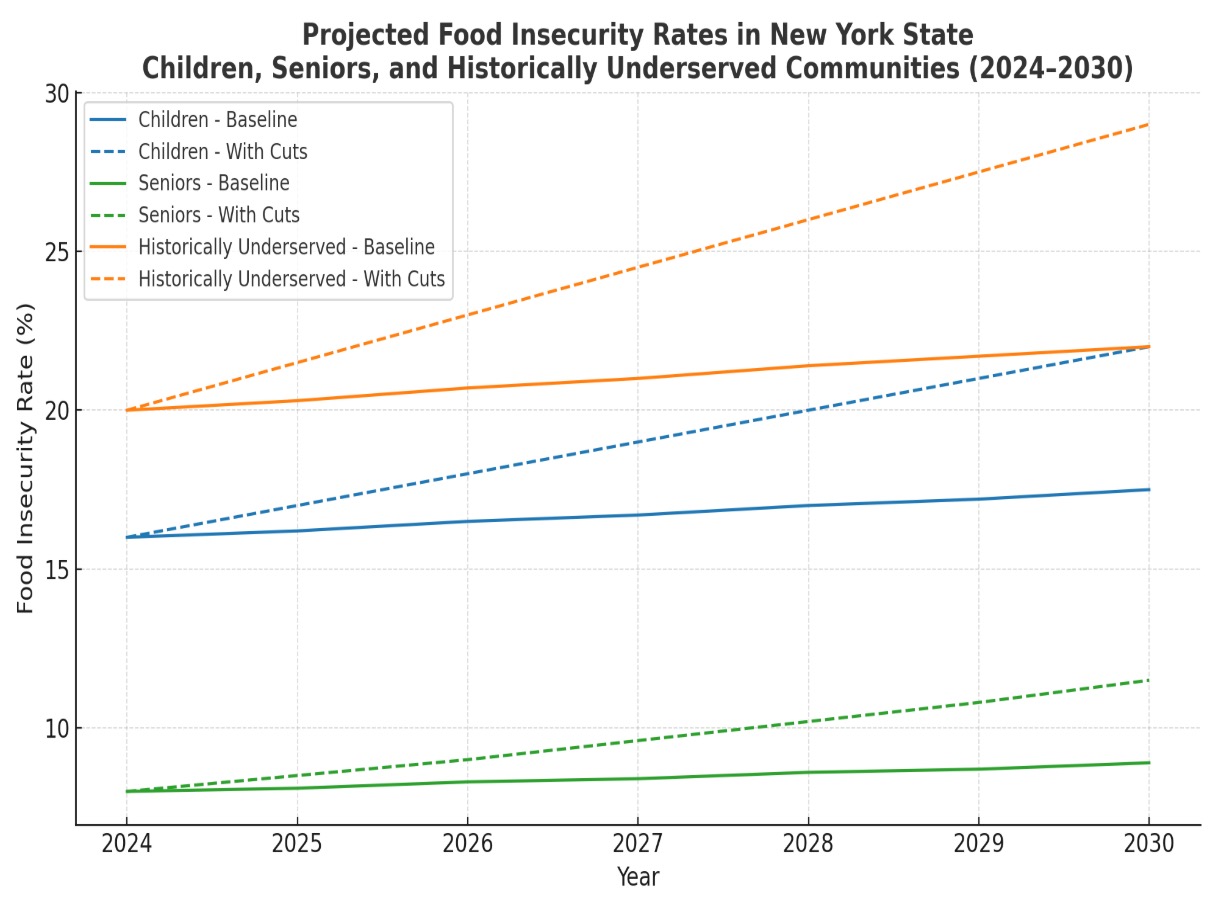
The current meal gap for NYS is ~420 million meal per year. Federal budget cuts will push the number of lost meals to more than 620 million in 2028
Be part of the solution. Make a donation.
Preparing for the SNAP Cliff: 2028 and Beyond
Tenmile is launching a targeted fundraising campaign to prepare for the projected rise in food insecurity due to federal funding cuts.
Why now?
- SNAP reductions will begin phasing in 2026; full impact for NY expected by 2028.
- Projected to impact 3.2 million American families – including 300,000+ NY households.
- NYS food insecurity is projected to rise from 13.8% in 2024 to over 16% by 2034.
- The Emergency Food Assistance Program cuts reduce NYS food banks supply by 16M pounds annually.
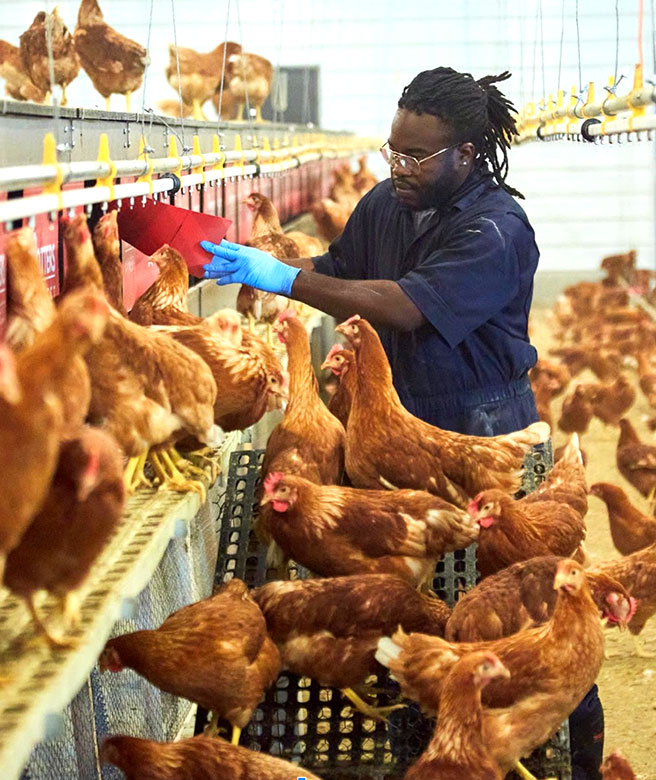
We Are Increasing Farm Production
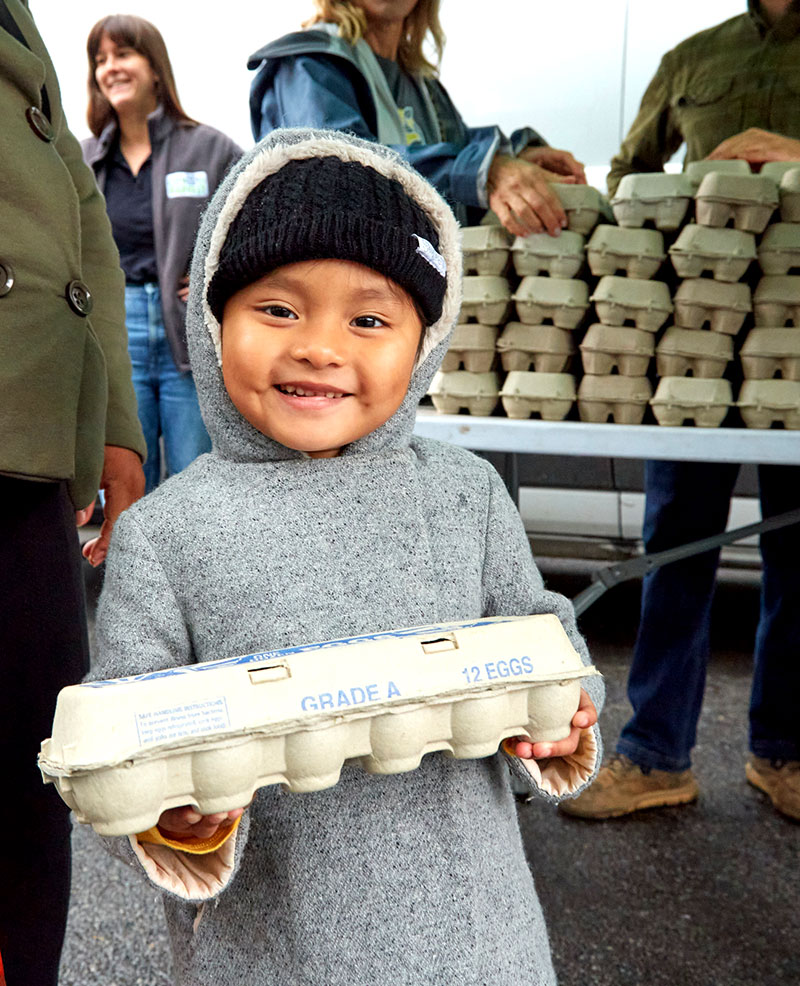
In response to increasing need, we are increase our farm production by 28% to provide high quality, locally-grown vegetables, fruit and eggs for an additional 32,000 households.
Tenmile’s food system model is a better way to provide fresh produce and essential support for food insecure New Yorkers at a time when traditional solutions are failing. Help us make a difference.
Advancing Food Justice and Equity
Food justice means access to healthy, affordable, culturally appropriate food — regardless of zip code, income, or race. It also means giving communities a voice in how that food is grown, distributed, and shared.
Tenmile’s Food Justice Approach
- Purpose-built supply: Our farm grows food specifically for donation — not surplus, not leftovers.
- Partner-designed plans: Food access organizations help decide what we grow, how much, and when it’s delivered — centering community needs.
- Culturally relevant crops: Our partners help select crops based on cultural preference and cooking practices.
- Consistent, high-quality nutrition: Regular deliveries of nutrient-rich, farm-fresh food fight chronic health disparities that affect low-income and underserved communities.
Why It Matters
- Many emergency food programs are under-resourced and forced to rely on whatever is available — often processed, low-nutrient foods.
- Tenmile’s model shifts power to the people served by these programs — giving them choice, voice, and dignity.
- Equity is not just who gets food — it’s what kind, how often, and whether that food heals or harms.